The Breakdown
How to sell a smell through a screen
At the turn of the last century, Claude Hopkins toured a Schlitz brewery hunting for an angle.
Colin Elefante-Smith · 2026-08-03 · 4 min read
At the turn of the last century, Claude Hopkins toured a Schlitz brewery hunting for an angle.
Plate-glass cooling rooms, bottles washed with live steam, artesian wells drilled 4,000 feet down in a city on Lake Michigan.
Every brewer did all of that. But nobody ever talked about it.
He ran the process as the ad, and within a couple of months Schlitz went from 5th to 1st in market share.
Hopkins wrote the rule down later:
"Platitudes and generalities roll off the human understanding like water from a duck. They leave no impression whatever."
Almost a hundred years later, and this fact remains. Klone Scents took note, and made this 95-second direct response banger.

## 1. Every claim is specific and falsifiable
Klone sells $39 dupes of designer fragrances. The whole business is built on a claim you can't verify through a phone screen.
Watch what the script does instead.
- Same ingredients, same suppliers
- 18 months matching every note
- Saffron, amberwood, cedar, jasmine, note for note
- 25% oil against their 5%
- LV sued them and lost
Every line is a specific, falsifiable claim you could go check.
I doubt anyone is pulling the court records. But "they sued us and lost" has the SHAPE of a checkable fact, and the shape is most of the job.
This is probably the most important persuasion element of the whole ad. Specific claims beat vague ones EVERY. SINGLE. TIME.
## 2. The villain gets brought to life
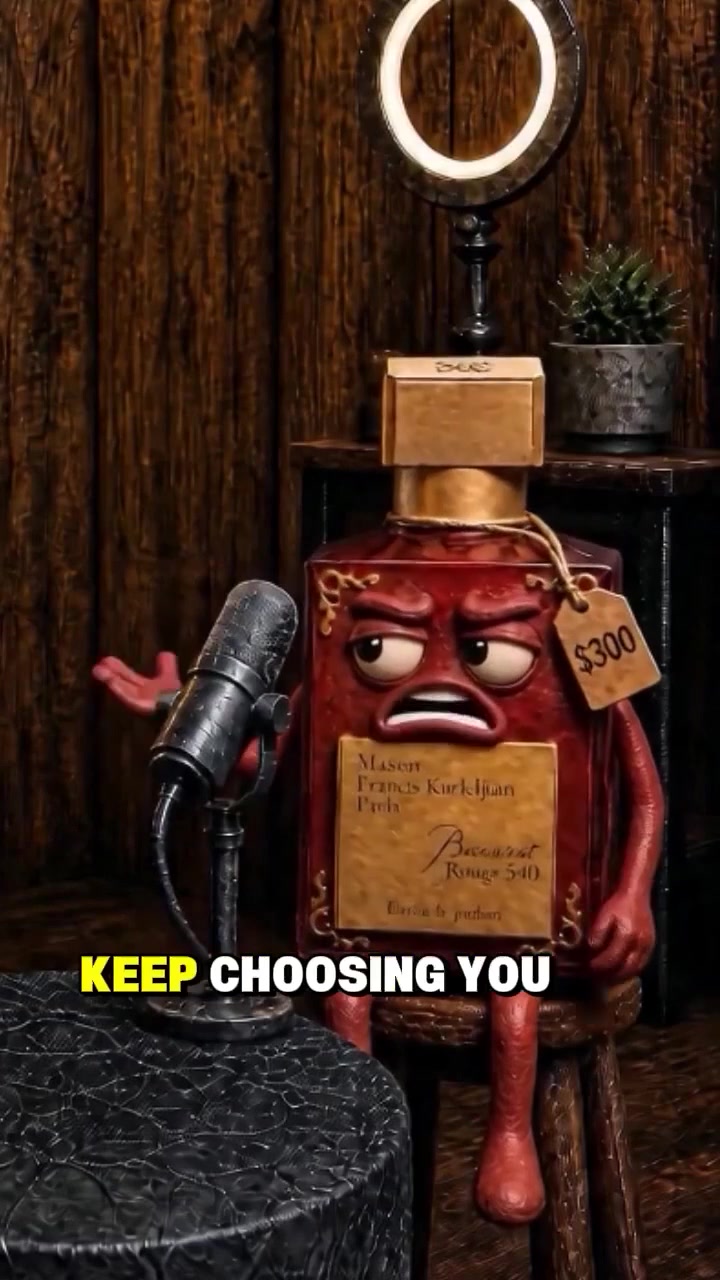
Two clay bottles with faces sit across a podcast table, debating which one is superior. One is a bottle of designer fragrance (the enemy), the other is one of Klone's products (the hero)
The whole thing looks ridiculous on its surface, but it holds attention like few other formats can.
And notice what the ad *doesn't do...*
at no point does it blame the customer for overpaying for cologne. Aim at the buyer and you get defensiveness. Aim at the BOTTLE and you establish a common enemy.
The stuck-up bottle is the mark. Not the people who buy it.
## 4. Cheap gets a reason why
Cheap is a red flag in fragrance. If it's $39 and smells like $450, your brain wants to know what's wrong with it.
So the ad addresses it upfront. You're not paying for a celebrity campaign, a heavy glass bottle, or a department store's markup. "Most of your price tag isn't the fragrance. It's the name."
Then the card lands. Retail Price: $350. Margin: $300.
Now the savings sound less like a corner they cut and more like a tax they refused to make you pay. The viewer now feels smart instead of cheap (a completely different emotion to buy on).
## 5. The B-roll sells the reaction, never the bottle
Every cutaway is somebody responding to the guy wearing it. Three women sliding into frame the second he sprays. A wife burying her nose in his neck at the front door.
Sexual companionship and social approval, two of the primal desires Drew Whitman built Cashvertising around. It’s not subtle, and it doesn't pretend to be.
They even cash the longevity spec with a picture. 12 hours after one spray, she's still complimenting him at dinner. A features transforms into a scene.
## How I'd beat it
Two tests I'd run against this control.
**Lock the anchor.**The ad quotes three prices for the same competitor: a $300 tag on its neck, a "Retail Price: $350" card, and "costs $450" in the voiceover. Klone's own product page anchors Baccarat Rouge at $450. In an ad built on checkable specifics, the one number that moves three times is the soft spot. I'd pin it to $450 everywhere, ad through landing page.
**Let the villain win a round.**Baccarat loses all eight exchanges. The damaging admission is old, reliable direct response, and Avis built a decade on "We're only No. 2." I'd give the red bottle one real hit ("a trained nose might still know the difference") and have Klone concede it before reframing. Give up the small thing, and the big claims get easier to swallow.
Claymation videos are everywhere now, and they’re crushing across industries.
But whether they convert or just hold attention for a few extra seconds depends on whether the MESSAGE matters to the buyer.
---
**Want this done for your brand?**
One call will show you where your creative is leaving money on the table.
[Book a call](https://cal.com/colinelefante/ad-oven-discovery-call)