The Breakdown
Sell the diagnosis
In the early 1920s, Listerine was an all-purpose antiseptic doing about $115,000 a year. The company pitched it for everything from cleaning floors to dandruff... and...
Colin Elefante-Smith · 2026-08-19 · 3 min read
In the early 1920s, Listerine was an all-purpose antiseptic doing about $115,000 a year. The company pitched it for everything from cleaning floors to dandruff... and nothing really stuck.
Then Gerard Lambert, the founder's son, asked the company chemist what the product was actually good for. The chemist came back with a clippings book and pointed to a word he'd found in a British medical journal: *halitosis*.
Lambert put the ad budget behind that word. The famous ads didn't sell mouthwash. They showed the lovely girl who was “often a bridesmaid but never a bride” and filed her loneliness under the clinical name.
**Within about seven years, revenue passed $8 million.**
Marketing scholar James Twitchell summed it up:
“Listerine did not make mouthwash as much as it made halitosis.”
The lesson? Sell the diagnosis first, then the product.
## 1. The “high cortisol” reframe
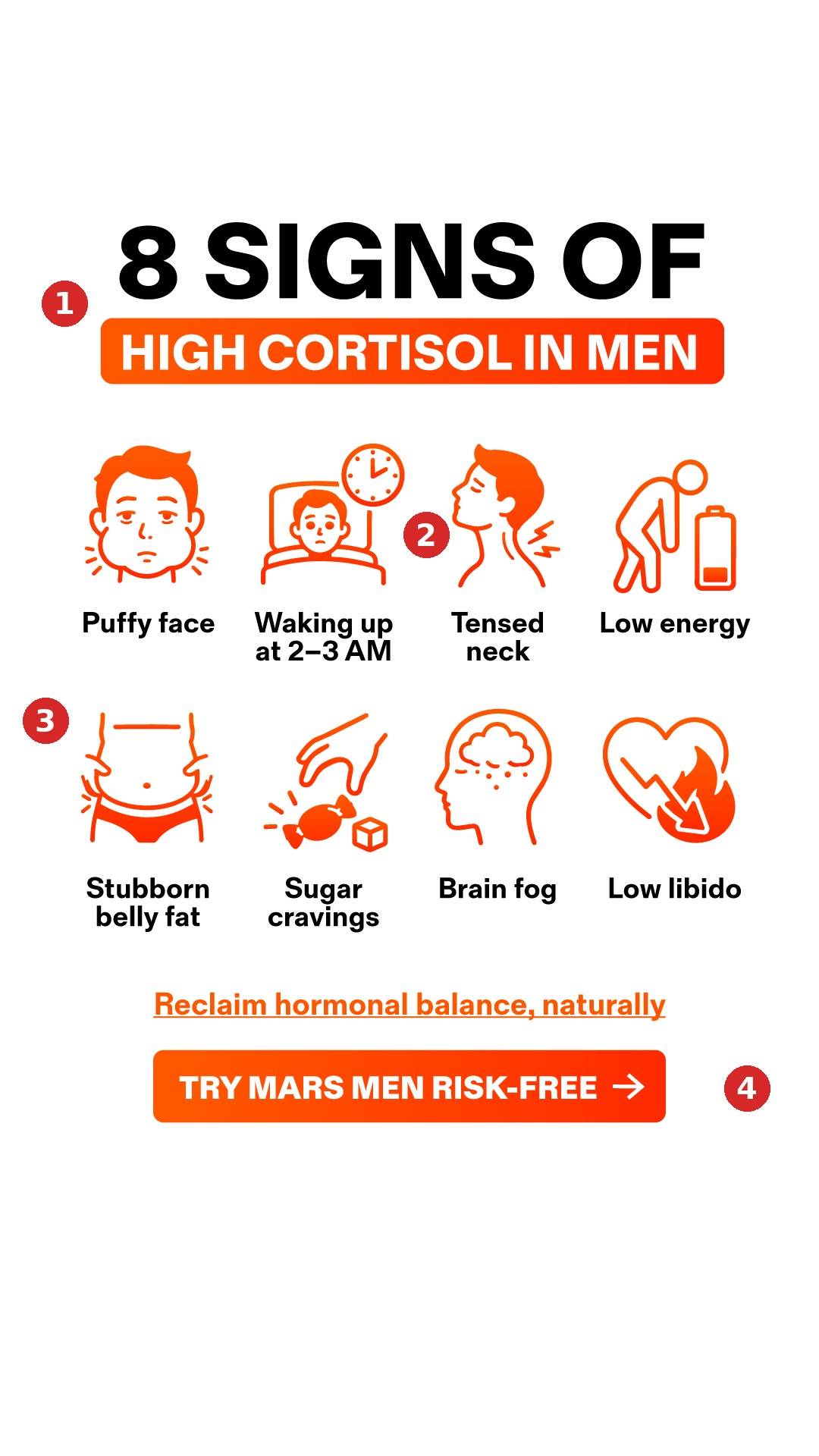
The Mars Men ad names a bunch of separate problems and reclassifies them as symptoms of something deeper:
- Puffy face
- belly fat
- brain fog
- low libido, etc.
These are things a stressed 45-year-old has been writing off separately for years as bad diet, bad sleep, or just getting older.
The headline takes all eight orphan symptoms and gives them ONE parent: **high cortisol.**
The reader arrives with scattered annoyances and leaves with a condition. And a condition implies a *treatment*.
If everything on this list is really one problem, then fixing that one problem fixes the whole list.
## 2. Every symptom is chosen for recognition
Read the grid the way the prospect reads it. Every item is common enough that a stressed man over 35 ticks at least three without trying. The net is wide on purpose.
The more boxes a reader mentally ticks, the more urgent the click becomes.
## 3. It wears infographic clothes, not ad clothes
White background, icon grid, editorial spacing, no product photo, no brand name until the button. This is dressed as the health-explainer content people screenshot and send to their brother, not as an ad.
It borrows the clothes of a format people already trust and read willingly. Nothing above the button looks like selling. By the time the reader reaches anything commercial, the education (and the self-diagnosis) has already happened.
## 4. The ad knows its job in the funnel
Mars Men sells a natural testosterone booster (tongkat ali, shilajit, zinc, that family). Now read the ad again: the word testosterone appears nowhere. No ingredients, no price, no health promise.
Cortisol is the doorway. Their own site's argument is that stress hormones suppress the hormones you want, so “reclaim hormonal balance, naturally” works as a hinge.
It closes the cortisol story and quietly opens the next page, where the cortisol-to-testosterone connection gets made for a visitor who arrives already asking “okay, I think I have high cortisol, what do I do about it?”
There's a compliance read in the wording too. “Signs of” educates without diagnosing. “Naturally” pre-frames against pharma without attacking it.
The only hard promise in the frame is “risk-free,” and it lives on the button where it belongs.
## How I'd Beat It
This is a great top-of-funnel ad, but there’s one change that would make it more congruent.
**Match the button to the moment.**
“TRY MARS MEN RISK-FREE” asks for a product decision from someone who only just found out cortisol was their problem. I'd test a curiosity CTA that continues the education instead: “SEE WHAT'S DRIVING IT.” The landing page is going to make the cortisol case anyway, so let the click stay in learning mode.
---
Education-first statics like this are one of the best ways to warm up cold traffic, but only when you know exactly which symptoms your buyer recognizes and the single cause that ties them together.
---
**Want this done for your brand?**
One call will show you where your creative is leaving money on the table.
[Book a call](https://cal.com/colinelefante/ad-oven-discovery-call)